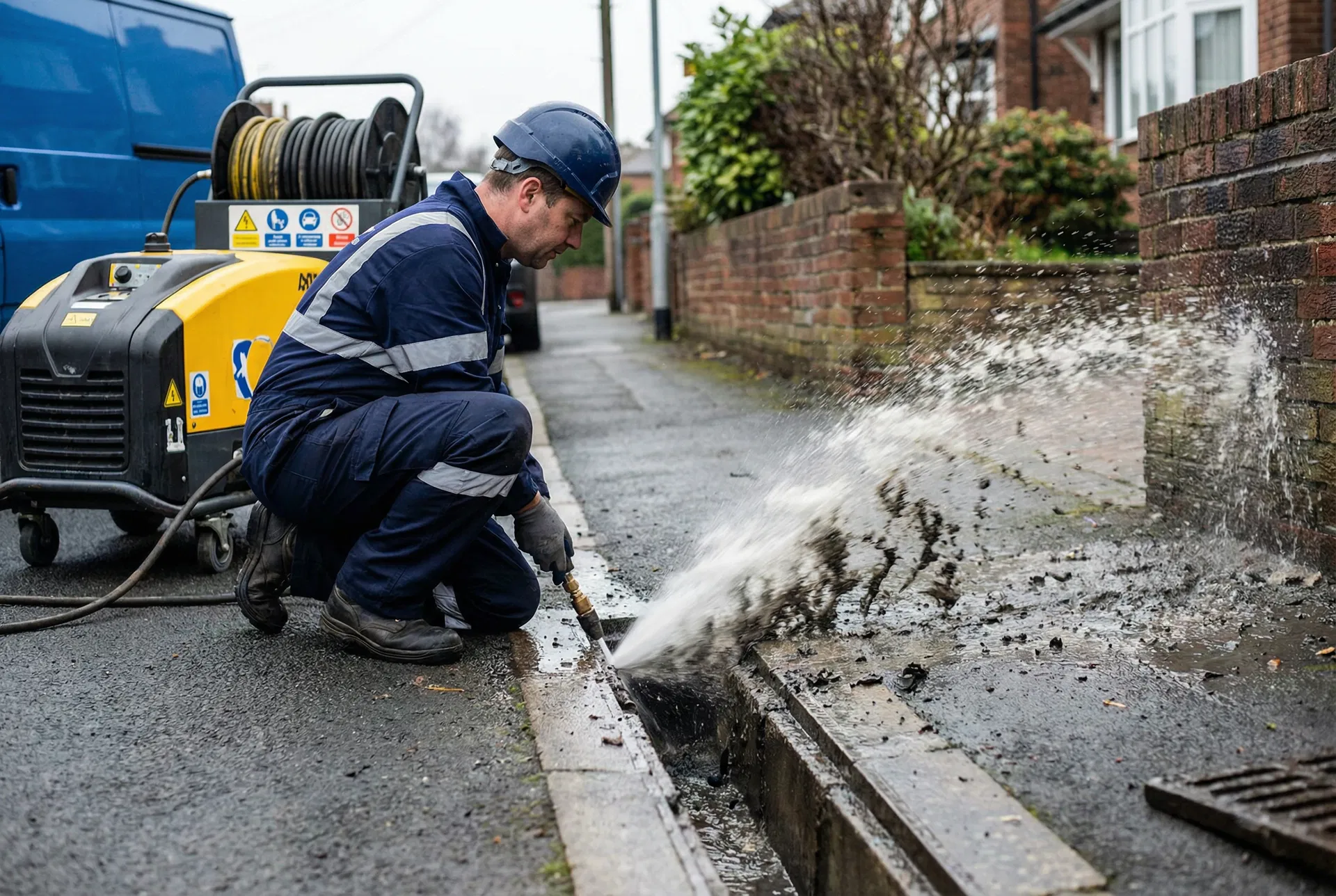
What drain jetting involves
Drain jetting uses pressurised water to clear deposits and blockages from drainage pipes. It is commonly considered for grease, silt, scale and debris where a simple rod clearance may not fully clean the pipe wall.
When it may help
- Grease, silt and debris build-up
- Recurring blockages
- Commercial kitchen or site drainage
- Drainage runs requiring a deeper clean
How it is assessed
A suitable jetting nozzle is selected for the pipe and the nature of the blockage. Water pressure and flow are assessed against the pipe condition and access, with the aim of restoring a clear run without unnecessary disruption.
What to expect
Before an engineer arrives
Describe the drainage use, the history of the blockage and the available access points. This helps determine whether jetting is appropriate or whether an inspection is needed first.
Timing
Time depends on the length and condition of the run, the material being removed and whether multiple access points are required. The expected approach should be explained before work starts.
What affects the price
The quotation depends on access, pipe length, the type of deposit, site constraints and whether the work is one-off clearance or planned maintenance.
Excavation and alternatives
Jetting works through existing access points and does not itself require excavation. Excavation may be considered only if a separate structural issue is found.
Common questions
What is drain jetting?
Drain jetting uses pressurised water to remove blockages and deposits from inside drainage pipes.
Is jetting always the right method?
Not always. The suitable method depends on the type of blockage, pipe condition, available access and whether there is an underlying structural problem.
Can jetting help with recurring grease build-up?
Jetting can remove grease and deposits from the pipe wall where it is suitable for the pipe and access conditions. A maintenance approach should be based on the drainage use.