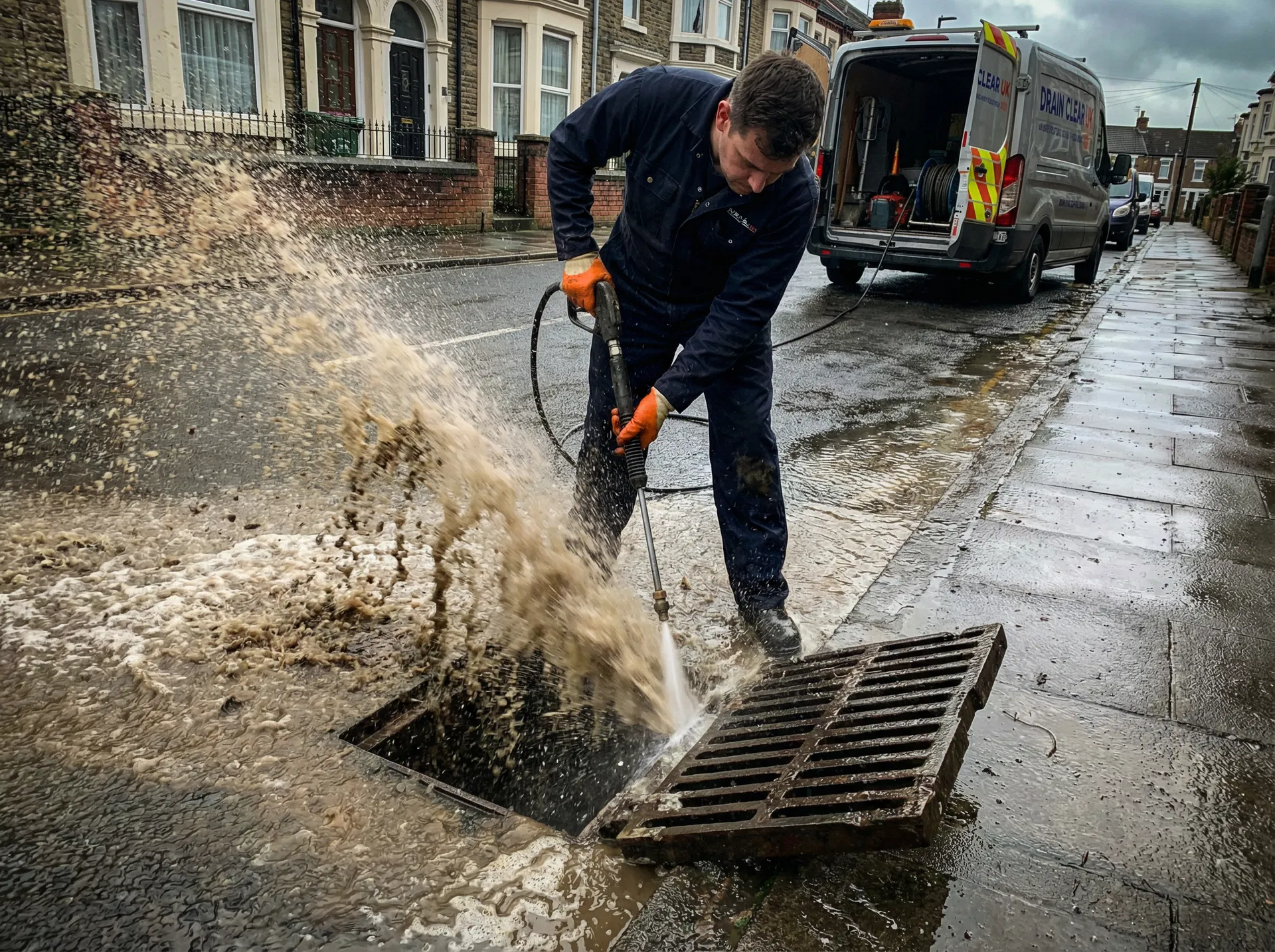
What drain unblocking involves
Drain unblocking is used when water is slow to drain, a toilet will not clear, a gully is overflowing, or an external drain has stopped flowing. The right method depends on where the blockage sits, the pipe material and whether the problem has happened before.
When it may help
- Slow or backed-up sinks and toilets
- Overflowing gullies or inspection chambers
- Recurring blockages
- Debris, grease, wipes or root intrusion
How it is assessed
An engineer will first establish the affected fixtures and available access points. Depending on the blockage, clearance may use rodding, water jetting or another suitable method. A repeat problem may require a camera inspection to identify an underlying defect.
What to expect
Before an engineer arrives
Explain which fixtures are affected, when the problem began and whether there is visible flooding. This helps the engineer assess access and the likely next steps on arrival.
Timing
Simple local blockages can be resolved quickly, while longer runs, restricted access or repeat faults can take longer. The work required should be explained after an initial assessment.
What affects the price
Cost depends on access, the location and severity of the blockage, the equipment required and whether further investigation is needed. Ask for the scope and quotation before work starts.
Excavation and alternatives
Most blockages are investigated and cleared through existing access points. Excavation is normally considered only where a structural fault cannot be repaired from within the pipe.
Common questions
What causes a blocked drain?
Common causes include grease, food waste, wipes, sanitary products, hair, leaves and debris. A recurring blockage can also indicate a defect or root intrusion.
Can a blocked drain be cleared without digging?
Many blockages can be investigated through existing access points using rodding or water jetting. Digging is usually considered only where a structural fault needs repair.
When is a camera survey needed after clearance?
A camera survey can be useful where the same drain blocks repeatedly, the clearance does not restore flow, or a damaged pipe is suspected.