Written by HydroFlow Drainage Engineers
We use both methods every day. This guide is based on our direct experience of when each one works, when it fails, and when the wrong choice leads to a repeat call-out.
City & Guilds qualified · NADC members · Environment Agency registered waste carrier · 15+ years serving Preston
When you have a blocked drain, two of the most common methods used to clear it are drain jetting and drain rodding. Both can be effective, but they work in very different ways and are suited to different types of blockage. Understanding the difference will help you make an informed decision — and help you ask the right questions when you call a drainage company.
In this guide, we explain how each method works, when to use each one, and why high-pressure drain jetting is generally the more effective long-term solution — based on what we see when we attend call-outs across Preston and Lancashire every week.
What Is Drain Rodding?
Drain rodding is a manual method of clearing blocked drains that has been used by drainage engineers for decades. It involves inserting a series of flexible rods into the drain through an inspection chamber or access point, and pushing them through the pipe to physically break up or dislodge the blockage.
The rods are screwed together end-to-end as they are pushed further into the pipe. Different attachments can be fitted to the end of the rod — such as a plunger, corkscrew, or scraper — depending on the type of blockage.
Advantages of Rodding
- Lower cost than jetting
- No specialist equipment required
- Suitable for simple, soft blockages
- Quick to set up
Disadvantages of Rodding
- Does not clean pipe walls
- Less effective on grease and root masses
- Higher risk of recurring blockage
- Cannot reach long or complex drainage runs
What Is Drain Jetting?
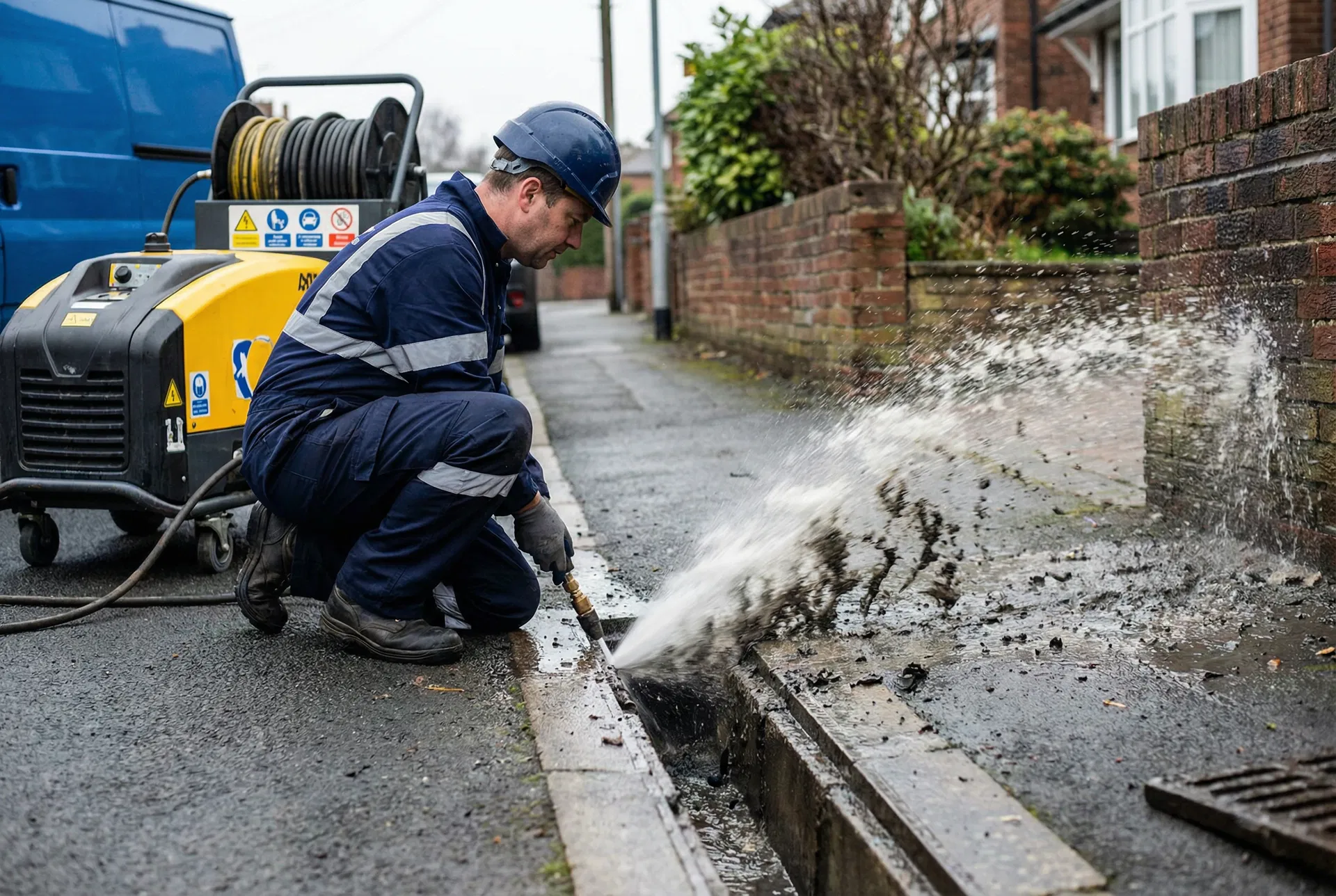
Drain jetting (also known as high-pressure water jetting or hydro jetting) uses a powerful jet of water at pressures of up to 4,000 PSI to blast blockages clear and thoroughly clean the inside of the drainage pipe. A flexible hose with a specialist nozzle is inserted into the drain and pushed through the pipe, with the high-pressure water jet cutting through blockages and flushing all debris downstream.
Unlike rodding, which simply breaks up or dislodges a blockage, drain jetting cleans the entire pipe wall — removing grease, scale, root masses, and debris that would otherwise remain in the pipe and cause a recurring blockage.
Advantages of Jetting
- Cleans entire pipe wall
- Effective on grease, roots, and scale
- Reduces risk of recurring blockage
- Suitable for commercial drains
- Can reach long and complex drainage runs
Disadvantages of Jetting
- Higher cost than rodding
- Requires specialist equipment
- Not suitable for severely damaged pipes
Drain Jetting vs Drain Rodding: Side-by-Side Comparison
| Aspect | Drain Jetting | Drain Rodding |
|---|---|---|
| Method | High-pressure water jet (up to 4,000 PSI) | Flexible rods pushed manually |
| Effectiveness | Removes blockage and cleans pipe walls | Breaks up or dislodges blockage only |
| Best for | Grease, roots, scale, recurring blockages | Simple, soft blockages near access point |
| Pipe cleaning | Full pipe wall cleaned | Minimal pipe wall cleaning |
| Risk of recurrence | Lower — pipe left clean | Higher — debris remains on pipe walls |
| Suitable for commercial drains | Yes | Limited |
| Typical cost | Higher (specialist equipment required) | Lower (manual method) |
When Should You Use Each Method?
The choice between drain jetting and rodding depends on the type and severity of the blockage:
Use drain jetting for:
- Grease and fat blockages in kitchen drains
- Tree root masses in drainage pipes
- Scale and mineral build-up in older pipes
- Recurring blockages that keep coming back
- Commercial drains and large-diameter pipes
- Any blockage where a thorough pipe clean is required
Drain rodding may be sufficient for:
- A simple, soft blockage (e.g., a small amount of toilet paper) close to the access point
- As a temporary measure while waiting for a jetting engineer
Why HydroFlow Drainage Preston Uses High-Pressure Jetting
At HydroFlow Drainage Preston, we use high-pressure drain jetting as our primary method for clearing blocked drains. Our engineers carry professional-grade jetting equipment on every vehicle, allowing us to tackle even the most stubborn blockages — from grease-coated kitchen drains to root-infested main sewers.
We choose jetting over rodding because it delivers a more thorough result, reduces the likelihood of a recurring blockage, and leaves the pipe in a clean condition. For customers who have experienced the same blockage multiple times, switching from rodding to jetting almost always resolves the problem permanently.
To book a drain jetting service in Preston, call us on 01772 393 127 or request a free quote online. We cover Preston, Leyland, Chorley, Blackburn, Fulwood, Lancaster, and all surrounding areas in Lancashire.
Real Job: Rodding Fails, Jetting Resolves a 3-Year Recurring Blockage, Leyland (February 2026)
A customer in Leyland had been having their kitchen drain cleared by a local plumber every 4–6 months for approximately three years. Each time, the plumber used drain rods and the drain would run freely for a few months before blocking again. When they called us, we used high-pressure jetting at 4,000 PSI and immediately cleared a substantial grease and fat deposit that had built up approximately 4 metres into the pipe — well beyond the reach of the rods that had been used previously.
Rodding had been breaking through the soft centre of the blockage each time, allowing the drain to run temporarily, but the deposit on the pipe walls remained and quickly accumulated again. Jetting scoured the full bore of the pipe and removed the wall deposits entirely.
Outcome: Drain clear after first jetting visit. No further call-outs from this address in the following 5 months.
Frequently Asked Questions
What is the difference between drain jetting and drain rodding?
Drain rodding uses flexible rods pushed manually to break up a blockage. Drain jetting uses high-pressure water (up to 4,000 PSI) to blast blockages clear and clean the pipe walls. Jetting is generally more effective, particularly for grease, root masses, and recurring blockages.
Is drain jetting better than rodding?
In most cases, yes. Drain jetting is more thorough because it cleans the entire pipe wall, not just the blockage. This reduces the risk of a recurring blockage. Rodding may be sufficient for simple, soft blockages close to the access point.
Can drain jetting damage pipes?
When carried out by a trained engineer at the correct pressure, drain jetting is safe for all standard drainage pipes. The risk arises when jetting is carried out at excessive pressure on already-damaged pipes. A professional drainage company will always assess pipe condition before jetting.
How much does drain jetting cost compared to rodding?
Drain jetting typically costs more than rodding because it requires specialist equipment. However, jetting is more effective and less likely to result in a recurring blockage, making it better value in the long run. Call HydroFlow Drainage Preston on 01772 393 127 for a fixed quote.
When should I use drain jetting instead of rodding?
Use drain jetting for grease blockages, tree root masses, recurring blockages, commercial drains, and any situation where a thorough pipe clean is required. Rodding may be sufficient for a simple, soft blockage close to the access point.